Showing posts with label risk management. Show all posts

Saturday, November 28, 2009

You Can't Handle The Truth About Stocks

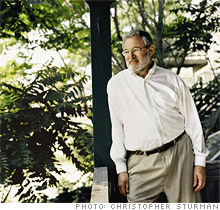
Over the Thanksgiving break, I was catching up on my backlog of magazine reading. An article in the September 2009 issue of Money Magazine caught my eye: You Can't Handle The Truth About Stocks, which profiles the economist, Zvi Bodie of Boston University School of Management, who argues against conventional financial planning:
"If you need the high return of stocks to reach your goals, then you can't afford to invest in them."
Here are some of his thoughts:

"... The standard models that are used to give investment advice to millions of Americans are fundamentally wrong. We're told that over time, stocks get less risky, but that's bull. Stocks are always risky -- whether in the short or long run. Prices dropped by 37% last year. While improbable, there's nothing to say they couldn't drop by that much again next year or the year before you retire. And diversification doesn't take away that risk. That's why retirement money belongs in truly safe assets whose value won't go down -- not in stocks..."

"... If you look at most online retirement calculators, they make two assumptions: one, that you want to retire at age 65, and two, that people will be able to save only a certain amount -- say 10%. As a result, they spit out risky portfolios to get a higher return. Well, who says we all want to retire at 65 and can save only 10%? What if I retire at 70 or 75? What if I save 30%? Suddenly, you don't need to take so much risk in your portfolio..."

"... notice what they're being told. They're being told that by investing in equities, they are going to get a higher return without extra risk. That's the problem. You have to make a sacrifice somewhere -- whether that means accepting a lower standard of living now, picking a later retirement date, or taking on risk in your portfolio..."
Professor Zvi Bodie echoes what I earlier blogged in April 2009 in a 4-part posting entitled "Frugal Living & Managing Risk" (Part 1, Part 2, Part 3, and Part 4) where I explained why I invest 100% of my 401K in a stable value fund.

As I see it, Americans want to have their cake and eat it. They want to retire in style but do not want to sacrifice, i.e., save, for it. If we only save 5% of our monthly income for our retirement vs. 30%, then we would have to take a lot more risk to have the 5% match up to the 30% savings rate. No wonder we take too much risk with our retirement funds. For me, the answer is clear: a simple and frugal lifestyle, with less stress and blood pressure worrying which direction my retirement savings is heading.

Saturday, April 18, 2009

Frugal Living & Managing Risk, IV

In response to the e-mails that I received with regard to my "Frugal Living & Managing Risk" series:
  1. Aren't you a bit too conservative in your strategy? How would you ensure that you do not outlive your retirement savings?
    This is a good question. What most people forget is that stocks are inherently risky investments. There is no such thing as risk-free stocks. While stocks offer the potential of good returns, I would also argue that stocks carry significant risks that people ignore at their own peril. Those who focus on the fact that the long term average return of stocks beat other investments often forget that historical figures indicative of future performance. When investments dropped 30%-40% in 2008, it is really painful and will take a long time to recover. The stock market cannot guarantee an annual 10%-20% return to make up for a 30%-40% drop in 2008. Hence, I stand by my decision to invest in stable-value funds, a decision I made in 2006.

  2. Would you ever invest in stocks or mutual/index funds?
    I don't rule out investing in stocks, index funds or mutual funds. My strategy comprises keeping my 401K and emergency fund in conservative investments (stable value funds for my 401K and high yield savings/CDs for emergency fund). Once I fully fund my 401K (to its annual tax-free limit) and emergency funds (to 1 year's worth of expenses), then I would invest in stocks, index funds, mutual funds, etc.., which I would consider as my "extra investments." If I lose any money in my "extra investments," the losses would be limited to the "extra" money that I could afford to lose. Retirement and emergency funds are money that I cannot afford to lose. In other words, I have deliberately adopted a conservative investment strategy that requires me to save more, rather than to take higher risks. The 2008 financial crash is a reminder to us that an aggressive investment strategy is no antidote to inadequate savings.
Previous postings in this series:
Frugal Living & Managing Risk, I
Frugal Living & Managing Risk, II
Frugal Living & Managing Risk, III

Friday, April 10, 2009

Frugal Living & Managing Risk, III

Two days ago, I wrote about the issue of long term risk and how two academics are suggesting that the long run may be riskier than the short run. Yesterday, I shared my own experiences with balancing my goal of frugal living and risk. Today, I'll discuss my understanding of risk and how this influences my savings and investment strategies.

Managing risk is a big topic in many financial planning magazines, sites and blogs. I am particularly intrigued by the lead article in April 2009 issue of Money Magazine, The 7 New Rules of Financial Security, which seeks to "examine the flaws in the conventional wisdom" about money management and "propose some new rules for the road ahead." Here are the 7 Rules, as excerpted from the online article:
RULE 1: RISK
Old Thinking: If you can stomach the ups and downs that come with risk, you'll be rewarded.
New Rule: Risk isn't about your stomach. It's about making or missing an important goal.

RULE 2: CASH
Old Thinking: Keeping enough money in ultrasafe accounts to cover life's emergencies, but no more
New Rule: Rely more on cash can rescue you in an "asset emergency."

RULE 3: HUMAN CAPITAL
Old Thinking: The longer your time horizon, the more stocks you should own.
New Rule: Time isn't everything. You must also consider your earnings potential.

RULE 4: BORROWING
Old Thinking: Borrowing sensibly is a good way to build wealth.
New Rule: Borrow cautiously. You have to worry about the other guy's debt too.

RULE 5: HOUSING
Old Thinking: You can expect your house to appreciate handsomely over the long run.
New Rule: Your home won't make you rich. But it is an important savings tool.

RULE 6: DIVERSIFICATION
Old Thinking: A diversified portfolio lowers your risk.
New Rule: Diversification won't always save you - and you need more of it than you think.

RULE 7: RETIREMENT
Old Thinking: Retiring early is a prize.
New Rule: Retiring early is a problem.
Like the Money magazine article, I have also articulated my own rules for frugal living and managing risk. As I mentioned in Part II, my frugal nature and understanding of risk management have been shaped by the collapse of my parents' finances in the 1980-1982 recession. My dad was gungho and wanted to build up the family's financial wealth in a get-rick-quick approach by putting 100% of the family's investments in aggressive growth stocks. My family middle-class wealth was wiped out by the 1980 recession, and my parents have been very cautious ever since. Unlike some of my uncles and aunts, who lost a huge chunk of their investments in the 2008 crash, my parents, now comfortably retired, actually came out unscatched, since the bulk of their investments are in FDIC-insured CDs and high yield savings.

My own views for managing risks are as follow:
  1. My overriding life goal is to live frugally and save sufficiently for my retirement especially since I no longer have the safety net of a traditional defined-pension.

  2. I do not count on job security and work on the assumption that I can be laid off any time. In view of the deep-seated nature of the 2008 recession, I expect that I will take longer than normal to get a new job or may have to accept a job with lower pay and benefits.

  3. My views on risk management are shaped by #1 and #2 above. If I know that my own job is not secure, then I should not take on unnecessary debt and make risky moves.

  4. I argue that traditional financial planning advice assumes job security, so that one could ride out the swings in one's stocks and property investments by relying on one's regular salary. But what if there is a triple whammy: huge losses in stocks, property values and jobs?

  5. First, I manage my risk by having a sufficient emergency fund in case I am laid off tomorrow. My goal is to have an emergency fund that is sufficient to cover 12 months' worth of expenses (much higher than the 6-9 months advocated by financial planning experts, who in my opinion, never anticipated the Great Recession of 2008). As I mentioned previously, I keep my emergency fund in an HSBC High Yield Online Savings. While I'm not happy about an annual interest rate of 1.65%, the main goal of my emergency account is liquidity.

  6. Second, I manage my risk by investing my 401k in a stable value fund that is offered by my plan administrator. I contribute the maximum amount to get the employer matching contributions. As far as I am concerned, this is free money that my employer is giving me. Management is discussing the possibility of temporarily ending the employer match, in addition to other options like pay freeze, etc. Hence, the preservation of principal is important. I don't mind a 5% compound interest on my retirement investment, rather than seeing a 40%-50% plunge that my colleagues have seen, when they invested aggressively with the goal of early retirement.

  7. Third, I manage my risk by living frugally and not taking on unnecessary debt. The only debt I have is a 30-year fixed mortgage on my home and student loans. I have no credit card debt, as I pay off the balance in full every month. I'll blog more about my credit card strategies in a future post. I have no car loan, since I bought my car with cash. In other words, if I want something, e.g., a car, I save up in full and then go out to buy the car. This is not just being frugal on my part, but it also forces me to think whether I truly need something, thereby avoiding impulse purchases that I would regret later.

  8. Finally, I manage risk by investing cautiously. At this moment, I put my money in high-yield online savings and online CDs. As I mentioned yesterday, I would rather be the cautious and plodding tortoise that wins the race rather than the overconfident high speed hare that falls asleep and is left behind.

Thursday, April 9, 2009

Frugal Living & Managing Risk, II

Yesterday, I wrote about the issue of long term risk and how two academics are suggesting that the long run may be riskier than the short run. My own, decidedly non-academic views are shaped primarily by my parents' experiences in the 1980-1982 recession. My dad decided to invest 100% of the family emergency's fund in aggressive growth stocks. Not surprisingly, the 1980-1982 recession took a toll on my family's emergency fund. I remembered my parents talking about it and my mom grumbling about how the family lost at least $20,000, if not more. That was a pivotal moment in my parents' financial planning, as my mom decided that all future investments would be in FDIC-guaranteed CDs and bank instruments.

My parents' 1980s financial turmoil struck a nerve in me. I was in elementary school at that time and my brothers and I had to make significant financial sacrifices. It was my first introduction to frugal living and something that really made a significant impact on me. When I finished graduate school and started working in 2002, life was great. Pay was good and I opened my 401k with a 50-50 (stocks/bonds) mix. The stock market shot through the roof and my quarterly statements look great. However, some time in 2006 I was beginning to feel uneasy. I thought that the property bubble was unsustainable, especially when several extended family members quit their jobs to get into the mortgage broking business because it was minting money. In mid-2006, I told my 401k administrator to switch my entire retirement holdings to a stable-value fund. That's right. Everyone thought I was out of my mind. Inflation would out-run the guaranteed interest. I was in my 30s and should be able to take on greater risk. I have cousins who thought that I was losing out.

After the 2008 crash, it appears that my 2006 decision is prescient. If I had switched in 2007, I could have made even more money. But nevertheless, my retirement portfolio grows at a reasonable 4.5% pace. Hopefully AIG or whoever the insurer that is insuring my stable value fund will not go bankrupt. It really does feel good that my 401k is growing at a respectable pace (with low inflation) while my colleagues are looking at 30%-50% losses, depending on how aggressive they have invested.

I'm not saying that everyone should turn to stable-value funds. But it works for me. When I read about would-be retirees who have invested for 30-40 years and hoping to retire around this time, but now having to postpone their retirement because their 401k have dropped by 30%-40% in value, I realize that the "long run" is meaningless if you need the money now. Many of my colleagues scoffed at stable value funds, saying they are stodgy and plodding in its "stable" growth. After the 2008 crash, I realize the forgotten wisdom in the old Aesop fable of the hare and the tortoise, i.e., "slow and steady wins the race." And when I read about academics who suggest that the long run may be riskier than assumed, I think I made the right decision to opt for steady unspectacular growth that result in intact principal + reasonable growth.

In the next part, I'll discuss my understanding of risk and how this influences my savings and investment strategies.

Wednesday, April 8, 2009

Frugal Living & Managing Risk, I

It goes without saying that as a frugal person, I am always looking for news ways to save money, as well as receiving a good return on my savings. The dilemma that I am faced with is one that everyone, frugal or otherwise, have to contend with: balancing return and risk on one's savings. The traditional advice that investment professionals have always given is to invest in stocks in the long run because stocks have historically given the best returns over time. The 2008 financial meltdown has challenged this popular view, leading to much soul searching and a reconsideration of risk by many professionals. It appears that many folks put their blind faith in the assumption that the stock market produces positive long term growth of their retirement and other investment portfolios, notwithstanding the oft-cited disclaimer that past performance is no guarantee of future performance.

I found myself thinking about this when I was browsing the New York Times Online on Sunday, March 29 and an article, Now the Long Run Looks Riskier, Too caught my eye. In that article, Mark Hulbert challenges the conventional thinking that the stock market produces good long term returns, aqnd Hulbert cites a recent academic paper, "Are Stocks Really Less Volatile in the Long Run?" by Lubos Pastor, a finance professor at the University of Chicago Booth School of Business and Robert F. Stambaugh, a finance professor at the Wharton School of the University of Pennsylvania, who turned to Bayesian analysis, which was first articulated by an 18th century English mathematician and Presbyterian minister, Thomas Bayes to consider how the uncertainty of future outcomes affect risk. The Bayesian approach is opposite of traditional statistical methods that analyze historical data, which, as the two authors pointed out may not occur in the future. Hulbert summarizes:
Applying Bayesian techniques, the professors found that reversion to the mean isn’t powerful enough to overcome the growing uncertainty caused by other factors as the holding period grows. Specifically, they estimated that the volatility of stock market returns at the 30-year horizon is nearly one and a half times the volatility at the one-year horizon.
...
In an interview, Professor Pastor emphasized that the last two centuries could easily have been less hospitable to the United States, most likely lowering the stock market’s returns. An investor couldn’t have known in advance that the United States would win two world wars, for example, or emerge victorious from the cold war. In any case, he said, there is no guarantee that the next two centuries will be as kind to the domestic equity market as the last two.
If Pastor and Stambaugh are correct, then Americans have to rethink what they understand by risk, especially long term risk and reconsider how they plan their short and long term savings. Frugal living is not simply a question of saving every cent, but also thinking of the returns on one's frugal efforts.

In the next part, I will share my own experiences on this topic.